Cleaner Water Starts With the Right Treatment Approach
Water is one of those things most of us barely think about until something goes wrong. A strange taste, white scale around the taps, cloudy glasses, or an unpleasant smell can quickly turn an everyday necessity into a household headache. And while boiling or buying bottled water may seem like easy fixes, they don’t always address the actual problem.
The right water treatment solutions can make a noticeable difference by targeting specific contaminants and improving water quality where it matters most. But there isn’t one system that works perfectly for every home, business, or water source. Understanding what’s in your water is the first step toward choosing a practical solution.
Why Water Quality Can Be More Complicated Than It Looks
Clear water isn’t necessarily clean water. Some contaminants are visible, while others are completely undetectable without proper testing. Depending on the source, water may contain sediment, chlorine, iron, manganese, hardness minerals, microorganisms, or certain unwanted chemicals.
Even municipal water can develop taste and odor issues as it travels through aging pipes. Well water has its own challenges, including elevated mineral levels, iron, sulfur compounds, and sediment.
That’s why simply choosing a filter because it has a familiar label isn’t always the smartest move. A good treatment system should be matched to the actual water problem.
Water testing can help identify issues before you spend money on equipment that doesn’t solve them. It also gives homeowners and businesses a clearer idea of what level of filtration or treatment is genuinely necessary.
Choosing the Right System for a Home
For households, water needs can vary quite a bit. Someone living in a small apartment may mainly want better-tasting drinking water, while a family using private well water might need treatment throughout the entire property.
This is where residential water treatment becomes more than just installing a filter under the kitchen sink. Depending on water quality, a home may benefit from sediment filtration, carbon filtration, water softening, reverse osmosis, UV treatment, or a combination of technologies.
For example, a water softener is useful when hard water causes scale on fixtures and appliances. It doesn’t, however, solve every water-quality concern. Reverse osmosis can be excellent for drinking water when specific dissolved contaminants need to be reduced, but it isn’t necessarily the right choice for treating every gallon used in a house.
The goal isn’t to install the most complicated system available. It’s to install the system that makes sense for the household.
Hard Water Is More Than an Annoyance
Hard water is one of the most common complaints homeowners encounter. Calcium and magnesium aren’t usually considered dangerous at typical levels, but they can create plenty of practical problems.
You may notice spots on shower doors, dull-looking dishes, stiff laundry, or mineral deposits around faucets. Over time, scale can also build up inside water heaters, pipes, and appliances.
A properly selected softening system can reduce those effects and make routine cleaning a little less frustrating. There’s something satisfying about turning on a tap and not seeing that familiar crusty ring appear a few days later.
Still, hardness isn’t the only issue worth considering. If the water also contains iron, sulfur, sediment, or other contaminants, additional treatment may be needed.
Businesses Have Different Water Demands
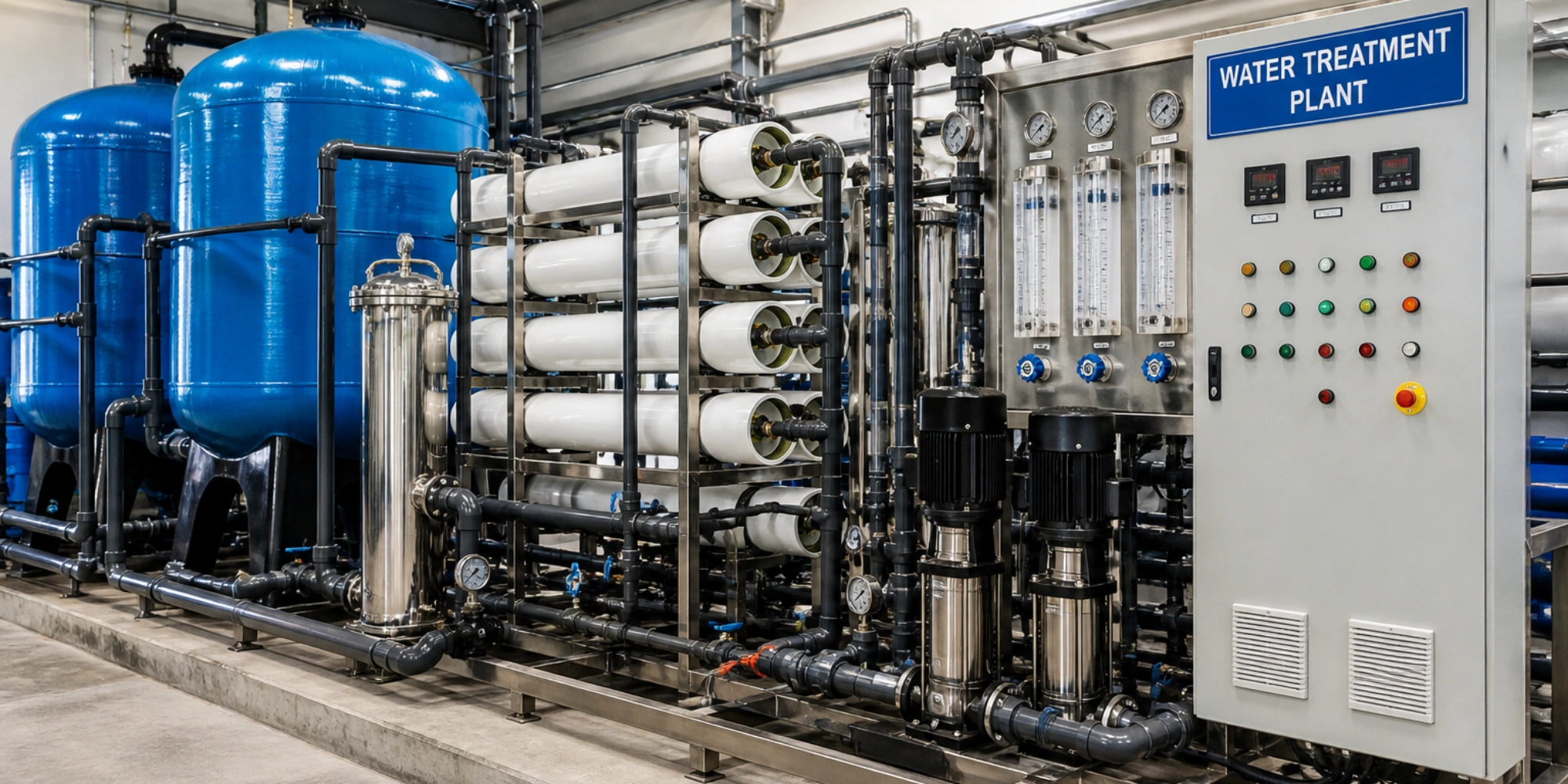
A business can use far more water than a typical household, and the consequences of poor water quality can sometimes be more expensive. Restaurants, hotels, offices, healthcare facilities, manufacturing sites, and other commercial properties may all have different requirements.
That makes commercial water treatment a more detailed process than simply choosing a larger residential filter. Flow rates, daily consumption, equipment protection, regulatory requirements, and the intended use of treated water all need to be considered.
A restaurant, for instance, may care deeply about taste and odor because water affects beverages, cooking, and ice. A manufacturing operation may be more concerned about mineral deposits interfering with equipment. Hotels might need consistent water quality across multiple floors and high-demand periods.
In commercial settings, reliability matters just as much as filtration performance. A system that works beautifully but can’t keep up with peak demand isn’t really doing its job.
Why Whole-Property Treatment Can Make Sense
Point-of-use filters are useful, especially when the primary concern is drinking and cooking water. But they only treat water at a particular tap.
Whole-property systems take a broader approach. Water can be treated before it reaches showers, washing machines, dishwashers, water heaters, and other fixtures. This can be especially helpful when the problem affects the entire supply rather than just drinking water.
There are trade-offs, of course. Whole-home equipment usually requires more space, a proper installation, regular maintenance, and a larger upfront investment.
That’s why it’s worth considering how the water is actually being used. If the issue is limited to taste, a drinking-water system may be enough. If hard water is damaging fixtures throughout the property, treating the incoming supply may be the more sensible option.
Maintenance Is Part of the Solution
Even a high-quality treatment system can’t run forever without attention. Filters become saturated, softener components need servicing, and treatment media can eventually lose effectiveness.
Skipping maintenance is an easy mistake. People install a system, enjoy better water for a while, and then forget about it. Months or years later, performance starts slipping and they assume the equipment has failed.
Regular filter replacement and professional inspections can help prevent that situation. Maintenance schedules vary depending on the technology, water quality, and amount of water being treated, so there isn’t one universal timetable.
It also helps to keep an eye on changes in the water itself. A new smell, unusual color, reduced pressure, or sudden taste change shouldn’t simply be ignored.
Professional Assessment Can Save Money
There’s nothing wrong with doing some research yourself. In fact, homeowners and business owners should understand their options. But water treatment isn’t always a plug-and-play decision.
A professional assessment can help determine which contaminants are present, what treatment method addresses them, how much capacity is required, and where equipment should be installed. It can also prevent the common mistake of buying a system based solely on a marketing claim.
The cheapest system isn’t automatically the best value. A properly sized system that lasts longer and treats the right contaminants may cost less over its useful life than repeatedly replacing inadequate equipment.
Better Water Is About More Than Filtration
Good water treatment isn’t about chasing the latest gadget or installing the biggest system you can afford. It’s about understanding the water, identifying the real problem, and choosing technology that fits your needs.
For a homeowner, that might mean reducing hard-water scale and improving drinking water. For a business, it could mean protecting expensive equipment and maintaining consistent water quality across a busy facility.
The best approach starts with something surprisingly simple: test the water first. Once you know what you’re dealing with, the path forward becomes much clearer.
Clean, dependable water shouldn’t feel like a luxury. With the right treatment strategy and sensible maintenance, it can simply become one less thing you have to worry about.