A Practical Guide to Better Water Quality at Home
Good Water Begins With the Right Approach
There’s a funny thing about household water: when everything is working well, nobody thinks about it. You turn on the faucet, fill a glass, take a shower, and move on with your day. But when water starts leaving spots on dishes, creating scale around fixtures, or developing an odd taste, it suddenly becomes impossible to ignore.
The good news is that homeowners don’t have to simply put up with those problems. Modern water treatment options can address a range of concerns, from hard water and sediment to unpleasant tastes and odors. The important part is understanding what your home actually needs before investing in equipment.
Why Treating Water Throughout the Home Can Make Sense
Many people begin their water-quality journey with a filter attached to a kitchen faucet. That’s perfectly reasonable, especially if drinking-water taste is the main concern. But sometimes the issue goes beyond the kitchen.
Water runs through showers, washing machines, bathroom faucets, dishwashers, and other fixtures every day. If the water contains significant hardness or sediment, those concerns aren’t limited to the glass you drink from.
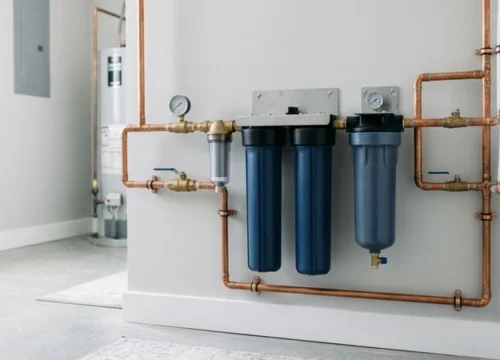
A whole-house filtration system can provide a broader approach by treating water as it enters the property. Depending on the technology selected, these systems may target specific contaminants or improve general water quality throughout the home.
It’s not necessarily about having the biggest system possible. It’s about treating water where treatment can provide the most practical benefit.
Hard Water Can Affect Everyday Comfort
Hard water is one of those problems that often starts quietly. At first, you might notice white spots on your glasses or a little buildup around the showerhead. Eventually, those small annoyances can become part of the daily routine.
Mineral scale can accumulate on fixtures and inside water-using appliances. Soap and shampoo may also behave differently in hard water, making showers feel less satisfying.
A properly selected water softening system can help reduce the effects of hardness. But homeowners should understand that softening and filtration are not the same thing. Each technology is designed for different water-quality concerns.
Testing the water first is usually the smartest move.
Testing Takes the Guesswork Out of Treatment
It’s easy to look online, read a few reviews, and decide that a particular filter or softener must be the answer. The problem? Your water may have completely different characteristics from someone else’s.
That’s why free water testing can be a useful starting point when it’s available from a reputable provider. Testing can help identify characteristics such as hardness, pH, iron, chlorine, or other concerns, depending on the test being performed.
Once you know what’s actually happening with your water, choosing a treatment system becomes much less of a guessing game.
And really, that’s the sensible way to spend money. Find the problem first, then buy the solution.
Water Treatment Is Also About Convenience
Installing treatment equipment is one thing. Keeping it running properly is another.
Some systems require filters to be replaced regularly. Water softeners may need salt replenishment. Other equipment may require periodic inspection or cleaning.
This is where ongoing service can make life easier. For households using a salt-based softener, a salt delivery service can remove one of those small but surprisingly annoying chores from the list.
Instead of remembering to check the salt level, buy heavy bags, transport them home, and haul them into the equipment area, scheduled delivery can keep the supply available when needed.
It’s not glamorous, sure. But neither is running out of salt on a Sunday morning when you suddenly realize the softener isn’t regenerating properly.
Choosing Equipment That Fits Your Lifestyle
A good water treatment system should fit into your daily routine rather than make life more complicated.
Before buying anything, think about the size of your household and your typical water usage. A couple living in a small home may need a very different setup from a busy family with several bathrooms and frequent laundry.
Also consider installation space. Some systems need more room than expected, especially when additional tanks or storage components are involved.
Maintenance is another consideration. Ask how often filters need replacing, what routine service involves, and whether replacement parts are readily available.
These aren’t exciting questions, but they’re the ones that matter after the installation crew has gone home.
Don’t Forget the Drinking Water
Whole-home treatment and drinking-water filtration can serve different purposes. A home may benefit from broad filtration while still using a dedicated drinking-water system in the kitchen.
Reverse osmosis, carbon filtration, and other technologies can be used depending on the water-quality concerns identified through testing.
Taste is also a personal matter. One family may love the taste of filtered water while another notices very little difference. If you’re considering a drinking-water system, it’s worth thinking about what you actually want to improve instead of buying a system based solely on marketing language.
Professional Guidance Can Be Worthwhile
Water treatment can become confusing quickly. There are filters, softeners, membranes, tanks, cartridges, monitors, and countless product specifications. It’s enough to make anyone’s head spin.
A qualified water-treatment professional can simplify the process by looking at your water conditions and household needs together.
The best conversations aren’t about pushing the most expensive equipment. They’re about explaining the problem clearly and showing which solutions are appropriate. Homeowners should feel comfortable asking what a system removes, what it doesn’t remove, how often it needs maintenance, and what the long-term ownership cost might be.
Clear answers are a good sign.
Making Water Quality a Long-Term Investment
Improving household water quality doesn’t have to mean transforming your entire plumbing system overnight. Sometimes the smartest approach is gradual.
Start by testing the water. Identify the most noticeable problem. Choose a treatment method that addresses it, and then see how things improve.
Over time, you may decide to add additional treatment or monitoring based on changing household needs.
The goal isn’t to create a complicated collection of equipment in the garage. It’s to build a practical water-quality setup that quietly does its job.
At the end of the day, better water is about more than technology. It’s about comfort, convenience, and confidence. When your water tastes good, fixtures stay cleaner, appliances are better protected, and maintenance is manageable, you notice the difference—even if you don’t think about it every time you turn on the tap.