What Homeowners Should Know About Water and Sewer Line Problems

When Your Plumbing Problem Is Bigger Than a Leaky Faucet
Most homeowners are comfortable dealing with the little plumbing issues that pop up around the house. A dripping faucet? Easy enough. A slow shower drain? Maybe a bottle of cleaner and a little patience will do the trick.
But problems involving underground water and sewer lines are a different story.
These systems sit quietly beneath driveways, lawns, streets, and foundations, doing their jobs without much attention. When something goes wrong, though, the signs can become hard to ignore. Low water pressure, soggy patches in the yard, sewage smells, or repeated drain backups may all point toward a problem that needs more than a quick household fix.
Understanding the warning signs can help you act before a small issue becomes a major repair.
The Early Signs Are Often Easy to Miss
Plumbing line problems don’t always announce themselves with a dramatic burst pipe. Sometimes, the first clue is surprisingly subtle.
You might notice that your water bill has increased even though your household habits haven’t changed. Perhaps the water pressure feels weaker than usual, or you hear water running when every faucet is turned off.
Outside, look for unusually green grass or soggy areas, particularly when there hasn’t been much rain. These can indicate that water is escaping underground.
Sewer problems have their own warning signs. Slow drains throughout the house, unpleasant odors, gurgling toilets, and recurring backups deserve attention. If several fixtures are affected at the same time, the problem may be located farther down the main sewer line rather than inside one individual drain.
Why Professional Inspection Matters
Underground plumbing is difficult to diagnose by simply looking at the surface. Digging randomly isn’t exactly a great strategy either.
Professional plumbers often use specialized equipment, including sewer cameras and locating tools, to determine where a problem exists. This approach can reduce unnecessary excavation and give homeowners a much clearer picture of what needs to be done.
Depending on the condition of the pipes, water & sewer line repair might involve repairing a damaged section, replacing deteriorated pipe, clearing an obstruction, or addressing a faulty connection.
The right solution depends on the cause. A good contractor should explain that rather than automatically recommending the biggest project.
Understanding Your Water Shut-Off System
One small component that homeowners often overlook is the water shut-off point. Knowing where it is — and knowing whether it works — can be incredibly useful during an emergency.
The shut-off mechanism allows the water supply to be controlled when repairs are necessary. If it’s damaged, stuck, buried, or difficult to access, responding to a leak can become much more complicated.
That’s where stop box repair may become necessary. A properly functioning stop box provides an important access point for controlling water service, and keeping it in good condition can make future maintenance much easier.
It’s one of those things most people don’t think about until they desperately need it.
When Repair Is Better Than Replacement
Not every damaged pipe needs to be completely replaced. In some cases, a localized repair may be enough to restore the system.
However, older pipes can present a different challenge. If a line has experienced repeated failures, corrosion, root intrusion, or extensive deterioration, continually repairing individual sections may become more expensive over time.
A professional assessment should consider the age of the system, material used, location of the damage, previous repairs, and expected lifespan.
Homeowners should also think about future plans for the property. Spending money on a temporary solution today may not make sense if a larger renovation or utility upgrade is already planned.
Plumbing Work for New Homes
Plumbing concerns aren’t limited to older properties. New construction requires careful installation from the beginning.
A properly designed system needs to account for water supply, drainage, sewer connections, fixture locations, property layout, and local requirements. Mistakes made during construction can be frustrating and expensive to correct once walls, floors, driveways, and landscaping are finished.
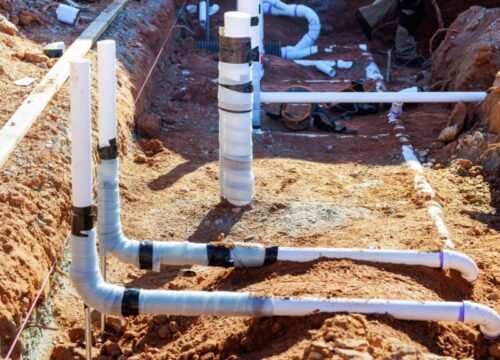
Professional residential installation helps ensure that water and sewer infrastructure is planned and connected properly before the home is completed.
For homeowners building from scratch, it’s worth discussing future access for maintenance too. Pipes may be hidden, but they still need attention occasionally. Smart planning can make those future repairs considerably less disruptive.
Protecting Your Property During Repairs
Water and sewer line projects can involve excavation, heavy equipment, and temporary interruptions to service. Homeowners should ask how the work will affect landscaping, driveways, walkways, and other areas of the property.
A responsible contractor should explain the expected work area and make reasonable efforts to limit unnecessary damage.
After the repair, restoration is another consideration. Depending on the project, this may involve replacing soil, repairing pavement, or restoring disturbed landscaping.
It’s better to discuss these details before work begins than to discover afterward that they weren’t included.
Choosing the Right Contractor
Experience matters when dealing with underground utilities. Look for a licensed and insured professional who has handled similar projects and understands local requirements.
A reliable contractor should be willing to inspect the problem, explain the available options, and provide a clear estimate. Don’t hesitate to ask questions about warranties, materials, timelines, permits, and restoration.
Be cautious when someone immediately recommends extensive excavation without first explaining why it’s necessary. Technology has made plumbing diagnostics much more precise, and homeowners should benefit from that.
A Little Attention Can Prevent a Big Mess
Water and sewer lines may be hidden, but the problems they create rarely stay hidden forever.
Pay attention to changes in water pressure, unexplained water bills, wet areas in the yard, sewer odors, slow drains, and recurring backups. These signs don’t necessarily mean disaster is coming, but they’re worth investigating.
The good news is that modern plumbing professionals have better tools and techniques than ever before. With accurate diagnosis and thoughtful planning, many difficult line problems can be addressed without turning the entire property upside down.
In the end, taking care of underground plumbing is really about protecting everything above it. Your home, your yard, your budget, and, perhaps most importantly, your peace of mind all benefit from a system that works the way it should.