Understanding Your Water and Home Plumbing Before Small Problems Grow
Most homeowners don’t spend much time thinking about water until something starts acting strange. A faucet develops an odd noise. The water pressure feels weaker than usual. There’s a mysterious damp patch near a wall, or perhaps the water simply tastes different than it used to.
At first, it’s easy to ignore these things. Life gets busy. A slightly higher water bill can be blamed on longer showers, visiting family, or the washing machine. A small stain on the ceiling might seem like an old problem that never really got fixed.
But water has a funny way of turning small issues into larger ones when nobody is looking.
Understanding what’s happening with your home’s water and plumbing can help you make better decisions before frustration—or damage—starts piling up. You don’t need to become an expert in pipes, minerals, pressure levels, and filtration systems. Still, knowing when to ask questions can make a real difference.
Your Water May Be Telling You Something
Water problems are not always obvious. Sometimes the clues are small enough that they blend into everyday life.
Maybe your dishes have started coming out of the dishwasher with cloudy spots. Your shower door needs constant scrubbing. There may be a metallic taste in drinking water, or laundry doesn’t feel as soft as it once did.
These experiences can have different causes, which is why guessing rarely gets you very far.
A proper Water Analysis can provide a clearer picture of the characteristics of the water entering your home. Depending on the situation, testing may look at factors such as hardness, minerals, pH, sediment, or other elements that influence how water tastes, smells, looks, and behaves.
The goal isn’t to make the process more complicated. Quite the opposite.
Instead of saying, “Something seems wrong with our water,” you can start asking more useful questions. Is hardness causing the buildup? Is there an issue affecting taste? Does the home need filtration, softening, or perhaps no major treatment at all?
Information gives you a better place to start.
One Home’s Water Problem Isn’t Always Another’s
It’s tempting to copy what a friend or neighbor has installed. They rave about their new water system, so naturally you start thinking you need the exact same thing.
Maybe you do. Maybe you absolutely don’t.
Homes can have different plumbing systems, water sources, household sizes, and patterns of use. A busy household with three bathrooms and children doing endless loads of laundry may have completely different needs from a couple living in a smaller home.
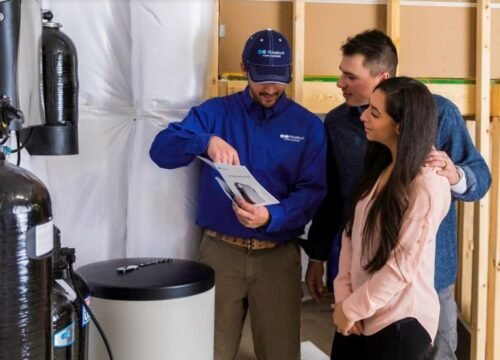
That’s why Water Evaluations can be useful before investing in equipment or making major plumbing decisions. A broader evaluation considers not just what may be present in the water but also how the household uses it and what specific concerns need attention.
For example, a family might initially believe they need a whole-home treatment system because their water tastes unpleasant. After looking more closely, they may discover that their main concern is limited to drinking water at one faucet.
Another homeowner may focus on a small amount of visible buildup while overlooking a more important plumbing issue. The right solution depends on the whole picture, not just the first symptom you notice.
Hard Water Can Create Everyday Frustration
Hard water is one of those problems that often announces itself through a collection of little annoyances.
White or chalky deposits around faucets. Spots on glasses. Soap that doesn’t seem to lather properly. Showerheads that collect buildup over time.
None of these things may feel like an emergency, but they can become tiring. People sometimes spend years switching cleaning products, buying special detergents, and scrubbing fixtures harder than necessary without realizing that the water itself could be part of the problem.
When the cause is understood, treatment decisions become more straightforward. A homeowner can explore options based on actual needs instead of buying equipment because an advertisement promised “perfect water.”
And that’s an important distinction. The best system isn’t automatically the biggest, most expensive, or most complicated one. It should address the issue you actually have.
The Hidden Problem of Water Leaks
Not every water concern comes from the water itself. Sometimes the bigger issue is where the water is going.
A leaking pipe behind a wall or beneath a floor can remain unnoticed for a surprisingly long time. By the time obvious signs appear, there may already be moisture damage, staining, warped materials, or even higher water costs.
That’s where Leak Detection becomes particularly valuable. Modern methods can help identify possible leaks without immediately tearing apart large sections of walls or flooring, depending on the situation and available equipment.
There are a few warning signs homeowners should take seriously. An unexplained increase in the water bill is one. Another is the sound of running water when every fixture is turned off. Damp spots, musty odors, peeling paint, or unexplained changes in water pressure can also deserve attention.
Of course, one symptom alone doesn’t automatically prove there’s a hidden leak. But ignoring repeated warning signs usually isn’t a great strategy either.
A small leak may seem harmless today. Six months later, it can be a much different story.
Why Early Investigation Can Save Money
Nobody enjoys spending money on inspections, testing, or plumbing services. It’s far more exciting to spend that same money on a vacation, a new television, or just about anything else.
Still, early investigation can sometimes prevent a minor issue from becoming an expensive repair.
Imagine noticing a faint water stain on the ceiling. You could paint over it and hope for the best. Or you could find out why it appeared.
The second option might feel inconvenient, but it can prevent more serious damage if water is actively entering the area.
The same principle applies to changes in water quality. If the water suddenly develops a noticeable odor, unusual color, or different taste, understanding the cause is generally more useful than simply masking the symptom.
Homeownership is full of these small decisions. Some problems really are minor. Others only look minor at first.
A Better Approach: Start With Questions
When something seems unusual, begin with simple observations.
Has the problem been there for years, or did it appear recently? Does it affect every faucet or only one? Is the issue related to hot water, cold water, or both? Has your water bill changed? Are there visible signs of moisture around appliances, pipes, or walls?
These details can help professionals understand what may be happening.
It’s also helpful to avoid jumping immediately to a specific solution. You may think you need a water softener, a filter, or a major plumbing repair, but the underlying cause could be something completely different.
A good evaluation should help narrow the options rather than overwhelm you with them.
Sometimes the answer is a simple adjustment or repair. Other times, a long-term treatment solution makes more sense. Either way, decisions based on real information are generally better than decisions based on a lucky guess.
Your Home Works Better When Small Problems Stay Small
Water runs quietly through much of a home, mostly unnoticed. That’s exactly how we like it.
But when something changes—a strange taste, mineral buildup, a damp wall, or an unexpectedly high water bill—it’s worth paying attention. These are often the moments when a little curiosity can prevent a lot of trouble later.
Understanding your water doesn’t mean obsessing over every drop. It simply means knowing when something deserves a closer look.
Test when testing makes sense. Evaluate the situation before buying equipment. Investigate signs of possible leaks rather than hoping they disappear on their own.
A comfortable home is built from lots of small systems working properly in the background. Water is one of the biggest. When you understand it a little better, you’re in a stronger position to protect your property, manage your expenses, and make choices that actually fit your everyday life.
And sometimes, the smartest home improvement begins with something as simple as asking, “What’s really going on here?”