Cleaner Water Starts at Home: Choosing the Right Treatment Solution
Water is one of those things we rarely think about until something goes wrong. A strange taste in your glass, white scale around the faucet, dry skin after a shower, or water that leaves stains on dishes can all be signs that your water quality needs attention. And while these problems may seem minor at first, they can become frustrating over time.
The good news is that modern water treatment solutions can address many common water-quality concerns. The right approach depends on where the water comes from, what’s actually in it, and how much water your household or business uses. There isn’t one magic system that works perfectly for everyone.
Understanding the basics can make choosing a treatment system much easier.
Why Water Quality Deserves More Attention
Tap or well water can contain a range of naturally occurring minerals, sediments, microorganisms, and other substances. Some are harmless but unpleasant, while others may affect the taste, appearance, plumbing, or overall usability of water.
Hard water is a common example. Calcium and magnesium can accumulate inside pipes and appliances, leaving behind that familiar chalky buildup. Over time, scale can reduce efficiency in water heaters, showerheads, washing machines, and other fixtures.
Then there are concerns such as chlorine taste, sediment, odors, or specific contaminants. These issues vary considerably from one location to another, which is why testing the water before choosing equipment is such a sensible first step.
A treatment system should solve an identified problem, not simply add another piece of equipment to your utility room.
Creating Better Water at Home
For households, water treatment is usually about comfort, convenience, and confidence. Families may want better-tasting drinking water, fewer mineral deposits, or cleaner-feeling water for bathing and laundry.
A properly designed residential water treatment system can bring several treatment methods together or focus on one particular concern. Filtration, sediment removal, activated carbon, reverse osmosis, and other technologies each have different purposes.
For example, a whole-home filter can treat incoming water before it reaches showers, sinks, washing machines, and other fixtures. A point-of-use system, meanwhile, may be better suited for drinking and cooking water.
The choice comes down to the water itself. If you’re dealing with sediment, you need a different solution than you would for excessive hardness or a specific dissolved contaminant. That’s why a water test is more useful than simply buying the most popular system online.
And honestly, this is where professional guidance can save a lot of trial and error.
What Water Softening Actually Does
Hard water isn’t usually an emergency, but it can be a persistent nuisance. Those white spots on your glassware? Often mineral deposits. The crust around your showerhead? Same story.
Water softening is designed primarily to reduce hardness minerals, particularly calcium and magnesium, that contribute to scale formation. Traditional ion-exchange softeners replace hardness ions with sodium or potassium ions, helping reduce the mineral buildup that can occur throughout a plumbing system.
The benefits can be noticeable. Water heaters may operate with less scale, fixtures can stay cleaner, and soap may lather more easily. Many homeowners also notice a different feel on their skin and hair.
Still, a softener isn’t a universal filter. It doesn’t automatically remove every contaminant from water. That’s an important distinction, especially when homeowners are trying to address several water-quality problems at once.
A good treatment plan may use softening alongside filtration or another technology, depending on the test results.
Water Treatment for Businesses Is a Different Challenge
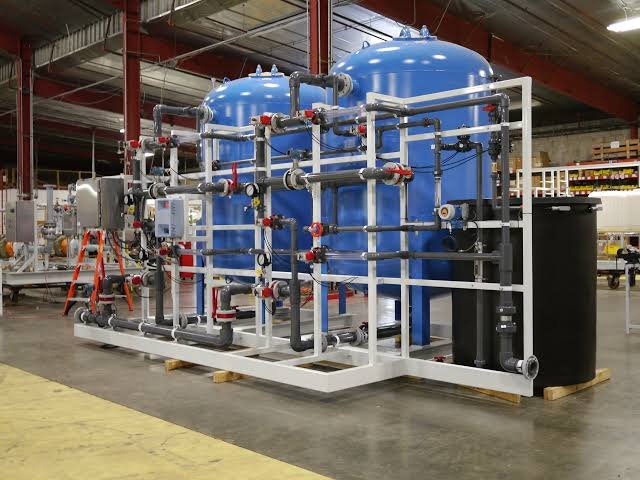
Commercial properties have a different set of demands. A restaurant, hotel, office building, school, healthcare facility, or manufacturing operation can consume far more water than an average household. Equipment may also be more sensitive to water chemistry.
That makes commercial water treatment less about installing a standard residential unit and more about designing a system around usage, flow rates, water chemistry, and operational requirements.
A restaurant, for instance, may be concerned about mineral buildup in dishwashers, coffee equipment, ice machines, and water heaters. A hotel might need consistent water quality across dozens or hundreds of rooms. Industrial facilities can have even more specialized requirements.
In these environments, downtime isn’t just annoying. It can cost money.
Commercial treatment systems therefore need regular inspection, maintenance, and monitoring. Filters need replacing, tanks may require servicing, and treatment performance should be checked periodically. A system that was correctly sized five years ago may no longer be ideal if the building’s water consumption has changed.
Don’t Ignore the Source of Your Water
Municipal water and private well water can have very different characteristics. Public water supplies are generally treated before distribution, but they can still contain minerals or disinfectant residues that affect taste and household plumbing.
Private wells are another matter. Groundwater chemistry can vary widely, and homeowners may encounter sediment, iron, sulfur odors, hardness, or other issues.
This is why guessing isn’t a great strategy.
A basic water analysis can provide useful information about hardness, pH, sediment, and other measurable characteristics. More detailed testing may be appropriate when there is a specific concern.
Once you know what’s actually present, choosing treatment technology becomes much more straightforward.
Maintenance Matters More Than Most People Think
Even the best water treatment equipment won’t perform properly forever without maintenance.
Filters become saturated. Resin eventually needs regeneration or replacement. Membranes can lose efficiency. Mechanical components can wear out. Neglecting these things can gradually reduce water quality and may even shorten the life of the equipment.
It’s easy to forget about a treatment system because, unlike a car, it doesn’t remind you with a dashboard light.
Set a maintenance schedule and keep track of filter changes, service visits, and performance checks. If water taste, pressure, color, or odor suddenly changes, don’t just assume the system is fine because it worked last year. Something may have changed in the source water or the equipment.
Choosing a System Without Overspending
More equipment doesn’t necessarily mean better water. In fact, installing unnecessary treatment can increase costs, maintenance, and complexity without providing meaningful benefits.
Start with three questions:
- What problems are you experiencing with the water?
- What does the water test actually show?
- How much water does the property use each day?
From there, consider the appropriate technology and system capacity. Look beyond the initial purchase price, too. Replacement filters, salt or other consumables, electricity, servicing, and installation can all affect the long-term cost.
For businesses, energy efficiency and downtime should also be part of the calculation.
The smartest system is usually the one that treats the right problems without trying to do everything.
Better Water Is About More Than a Filter
Water treatment isn’t simply about making water look clearer in a glass. Done properly, it can protect plumbing, reduce scale, improve taste, support appliance performance, and make everyday water use more comfortable.
But there’s no universal answer. Every property has its own water source, plumbing setup, usage habits, and priorities.
Start with testing. Understand the problem. Then choose technology that addresses it.
That’s a much better approach than chasing the latest gadget or assuming every home needs the same system. Clean, reliable water doesn’t have to be complicated—but getting it right does require a little thought.