Why Knowing Your Water Matters More Than You Think

We use water constantly without giving it much thought. It’s in the morning coffee, the glass beside the bed, the shower before work, and the vegetables being washed for dinner. Because it looks clean, we naturally assume everything is fine.
But water quality isn’t always something you can see.
Some issues leave obvious clues, such as staining, scale, strange odors, or an unpleasant metallic taste. Others don’t. That’s why understanding what’s actually in your household water can be more useful than simply judging it by appearance.
Whether your home uses municipal water or a private well, a sensible approach starts with testing, understanding the results, and choosing treatment based on facts rather than guesswork.
Water Quality Can Change Over Time
Water isn’t static. Its chemistry can change depending on the source, local geology, weather, plumbing, and surrounding land use.
For homeowners with private wells, groundwater conditions deserve particular attention. Rainfall, flooding, agricultural activity, construction, and changes in the well itself can influence water quality. Even if the water has been perfectly fine for years, that doesn’t mean it will always remain exactly the same.
Municipal supplies are treated and monitored, but household plumbing can still affect water by the time it reaches the tap.
A strange taste or a new stain doesn’t necessarily mean there’s a serious health problem. Still, it is a reason to investigate rather than shrug it off.
What Water Technicians Actually Do
When water quality becomes confusing, water technicians can help connect the dots between test results and practical treatment options.
Their role isn’t simply to sell equipment. A good technician should first understand the water source, listen to the homeowner’s concerns, review test results, and explain what the numbers mean in everyday language.
For example, if someone complains about white scale on faucets, the likely conversation may involve hardness. If orange staining appears in the bathroom, iron could be involved. Cloudiness might point toward sediment or other suspended particles.
The important part is diagnosis.
A treatment system should solve a specific water-quality problem. Installing an expensive collection of filters without knowing what they’re supposed to address isn’t particularly sensible—and can become costly to maintain.
Why Comprehensive Water Analysis Makes Sense
A comprehensive water analysis provides a broader picture than simply checking one characteristic.
Depending on the water source and testing goals, an analysis may examine factors such as pH, hardness, iron, manganese, turbidity, total dissolved solids, nitrate, bacteria, and other substances. The exact testing panel should be chosen according to local risks and household needs.
This broader view can reveal relationships between different problems.
For instance, water that causes heavy scale may also have chemistry that affects how certain treatment systems operate. Likewise, sediment can influence filtration and disinfection.
Testing doesn’t automatically mean you need treatment. Sometimes the results are reassuring, which is valuable information in itself.
Why Clear Water Isn’t Always the Full Story
One of the biggest misconceptions about water quality is that clear water equals safe water.
Unfortunately, some substances are dissolved at concentrations that don’t visibly change the water. You can’t reliably identify every contaminant by taste, smell, or appearance.
That’s particularly relevant when discussing private wells. Groundwater can contain naturally occurring minerals and other substances depending on the surrounding geology.
This is why laboratory testing is so useful. Instead of asking, “Does this water look okay?” you’re asking a much better question: “What does the testing actually show?”
That’s a more reliable starting point for making decisions.
Protecting the Quality of Your Drinking Water
Your drinking water deserves particular attention because it goes directly into the body. But water quality matters for more than drinking.
The same household supply may be used for cooking, brushing teeth, washing food, bathing, and making ice. Some issues may be primarily aesthetic, while others can have broader implications.
If a test identifies a contaminant of concern, treatment should be selected specifically for that substance. A general-purpose filter isn’t necessarily the answer to every problem.
Homeowners should also pay attention to maintenance. Filters have a lifespan. Water softeners need appropriate servicing. Disinfection systems may require monitoring. Ignoring maintenance can gradually reduce the effectiveness of even a high-quality setup.
Common Signs Worth Investigating
You don’t need to become obsessed with your water. A few practical observations can tell you when further investigation may be worthwhile.
Watch for:
- Orange or reddish stains around sinks and toilets
- White mineral deposits on faucets
- Cloudy or unusually colored water
- Metallic, earthy, or sulfur-like odors
- A sudden change in taste
- Sediment appearing in fixtures
- Excessive soap scum
- Changes following flooding or well repairs
These signs don’t automatically indicate unsafe water. They simply suggest that something has changed and deserves a closer look.
Sometimes the answer is surprisingly simple. Other times, proper testing uncovers a problem that wasn’t obvious at all.
Choosing Treatment Without Overspending
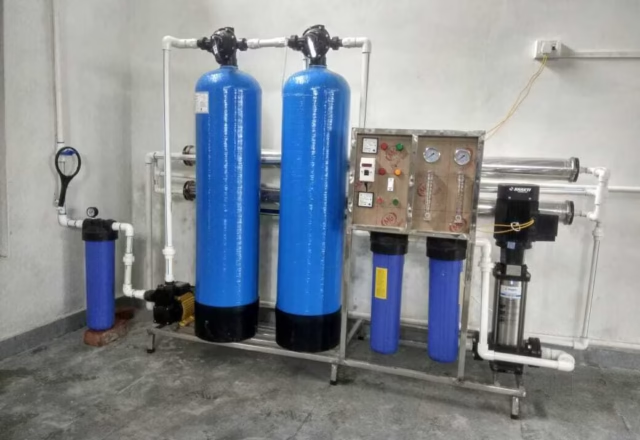
The water-treatment market can be overwhelming. There are softeners, carbon filters, sediment filters, reverse-osmosis systems, ultraviolet units, iron filters, specialty cartridges, and plenty of combinations.
More equipment doesn’t necessarily mean better water.
The right system depends on the contaminants present, their concentration, household water use, available space, maintenance requirements, and budget.
A good treatment plan should also consider what happens after installation. Who will replace filters? How often should the system be serviced? How will you know whether it continues working properly?
Those questions aren’t as exciting as shiny new equipment, but they’re important.
Testing Is an Ongoing Habit, Not a One-Time Event
Water testing can be particularly valuable for households using private wells. Regular checks establish a baseline, making unusual changes easier to identify.
Additional testing may be appropriate after flooding, major repairs, changes in the surrounding property, or noticeable changes in taste, odor, or appearance.
For municipal water users, reviewing available local water-quality information and paying attention to household plumbing can also be worthwhile.
The goal isn’t to worry about every glass of water. It’s simply to stay informed.
A Clearer Way Forward
Good water management starts with a simple idea: don’t guess when you can test.
Understanding your water source, identifying potential concerns, and reviewing reliable test results can make treatment decisions far less complicated. It also helps prevent homeowners from spending money on systems they don’t really need.
Water is part of almost everything we do at home, yet its quality often remains an afterthought. A little attention goes a surprisingly long way.
When you know what’s in your water, you can make smarter choices about filtration, maintenance, and everyday use. And that peace of mind? It’s worth having, especially when the water flowing from your tap is something your household depends on every single day.