Creating a More Comfortable Home With Better Water Treatment
Water is one of those everyday necessities we barely notice until there’s a problem. A strange taste, white marks around the faucet, soap that never seems to rinse properly, or cloudy glasses can all make you wonder what’s really happening with your household water. And honestly, these small annoyances can add up.
Modern water treatment gives homeowners several ways to improve their water, but choosing the right option takes a little thought. Not every home needs the same equipment. Your water source, mineral levels, plumbing, household size, and personal priorities all matter.
Understanding Your Home’s Water
Before buying any treatment equipment, it helps to understand the water entering your home. Municipal supplies are treated before distribution, while private wells can have very different characteristics depending on the location and surrounding environment.
Some water-quality issues are easy to spot. Hardness may leave scale around faucets and showerheads. Sediment can affect clarity, while certain substances can influence taste or odor. Other issues aren’t visible at all, which is why testing can be more useful than simply judging water by appearance.
A professional water test can provide a clearer picture of what you’re dealing with. Once you know the actual issue, selecting the right treatment becomes much less of a guessing game.
Why Whole-Home Treatment Can Be Practical
A filter attached to one kitchen faucet can be helpful, especially if drinking water is your primary concern. But households use water in many other places too. Showers, bathroom sinks, washing machines, dishwashers, and outdoor fixtures all rely on the same incoming supply.
That’s where whole home water treatment can make sense. Instead of treating water only at one point, a whole-home approach is designed to address water as it enters the property, allowing treated water to be distributed throughout the plumbing system.
The exact setup depends on what your water test shows. Some homes may benefit from sediment filtration, while others might need carbon filtration, softening, or additional treatment. There isn’t a magic box that solves every possible water issue.
Dealing With Hard Water
Hard water is one of the most common complaints homeowners encounter. It typically contains higher concentrations of calcium and magnesium, which can form scale over time.
You may notice white deposits around faucets, spots on dishes, or buildup on shower surfaces. Water heaters can also develop mineral deposits, potentially affecting their operation and efficiency.
Hardness isn’t necessarily something you can solve with a standard filter. If mineral scale is the main problem, a dedicated softening system may be more appropriate.
How Water Softening Works
Modern water softening solutions are generally designed to reduce calcium and magnesium through a process called ion exchange. In simple terms, the system exchanges hardness minerals for other ions, reducing the minerals responsible for scale.
The benefits can be surprisingly noticeable. Soap may lather more easily, dishes can have fewer spots, and fixtures may require less frequent scrubbing. Some homeowners also appreciate the difference in how their hair and skin feel after bathing.
Still, softening isn’t right for every household. Systems require maintenance and may use salt or water during regeneration, depending on the technology. That’s another reason to consider your actual water conditions before installation.
When Reverse Osmosis Makes Sense
Sometimes the main concern isn’t the water throughout the house but the quality of drinking and cooking water. That’s where reverse osmosis can be worth considering.
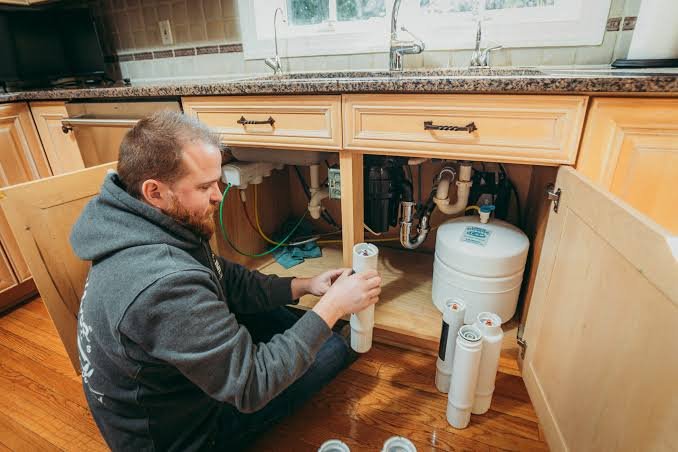
Reverse osmosis uses a semipermeable membrane to reduce many dissolved substances from water. Under-sink reverse osmosis systems are commonly used for drinking water because they can provide a highly treated supply at a dedicated kitchen faucet.
There are trade-offs. These systems generally need several filter stages and regular replacement of cartridges and membranes. They can also produce wastewater during the filtration process.
For households that prioritize highly treated drinking water, however, those considerations may be worthwhile. The key is understanding what the system is designed to reduce and whether those specific concerns exist in your water.
Don’t Ignore Maintenance
Even a well-designed water treatment system won’t perform properly forever without maintenance. Filters become loaded with the materials they capture, softening equipment needs servicing, and reverse osmosis membranes eventually require replacement.
It’s easy to forget these jobs because the equipment is usually tucked away in a basement, garage, or cabinet. A simple calendar reminder can help. Keep track of installation dates, filter changes, and service appointments.
Also pay attention to changes. If water pressure drops, taste changes, or the system starts behaving differently, don’t simply assume it’s normal. A small maintenance issue can sometimes become a bigger one when ignored.
Choosing the Right System for Your Home
There is no prize for owning the most complicated water-treatment setup. The better goal is to install equipment that addresses a genuine problem and fits your household.
Start with your water test. Then think about what matters most. Are you trying to reduce mineral buildup? Improve drinking water? Address unpleasant taste or odor? Or do you want a broader solution for the entire home?
Answering those questions makes the decision much easier. It also helps you avoid paying for features you’ll never actually use.
Better Water Starts With Better Decisions
Water treatment isn’t really about chasing perfection. It’s about making everyday water more suitable for the people and equipment that depend on it.
A thoughtful approach begins with testing, followed by choosing technology that matches the results. Whether that means softening, filtration, reverse osmosis, or a combination of methods, the right system can make household routines easier and maintenance less frustrating.
After all, water is involved in nearly everything we do at home. When it works well, we barely notice it. And maybe that’s the best outcome of all — clean, comfortable water doing its job quietly in the background, day after day.