What NSF Certification Really Means for Better Water Quality at Home

Water is easy to take for granted. You turn on the kitchen tap, fill a glass, make a cup of tea, and move on with your morning. Most of us don’t stop to wonder how that water was treated, what the filter is actually removing, or whether the equipment we bought is doing what the label suggests.
That’s where water treatment standards and professional guidance become useful. When you’re comparing filtration equipment, softeners, or drinking-water products, understanding certifications can help you separate meaningful claims from clever marketing. And when the subject is something your family drinks every day, that distinction matters.
Why Water Quality Is Worth Paying Attention To
Water can look perfectly clean and still contain substances that affect its taste, smell, hardness, or overall quality. Depending on the source, homeowners may deal with sediment, minerals, chlorine taste, unpleasant odors, or other contaminants.
The first step isn’t necessarily buying a treatment system. It’s understanding the water coming into your home. Municipal water reports can provide useful information, while private well owners may want regular testing to identify changes in their water supply.
Good water quality isn’t simply about water looking clear in a glass. Different treatment technologies are designed for different purposes, so knowing the actual issue makes choosing equipment much easier.
What Does NSF Certified Mean?
When shopping for water treatment equipment, you may come across the phrase nsf certified. This refers to certification through NSF, an organization that develops standards and evaluates products and systems against specific requirements.
Certification can provide useful reassurance because it indicates that a product has been evaluated for particular claims or standards. But there’s an important detail people sometimes miss: certification doesn’t automatically mean a product removes every possible contaminant.
Instead, you should look at exactly what the product is certified to do. A filter may be certified for reducing certain substances, while another product may be evaluated for different performance or material-safety requirements.
In other words, don’t stop at the certification logo. Read the details.
Certification Is Only One Piece of the Puzzle
A certification can be valuable, but it shouldn’t be the only factor you consider. Think about the system’s intended use, filtration capacity, replacement schedule, installation requirements, and long-term maintenance.
A product designed for improving drinking water at one kitchen faucet is very different from equipment intended to treat water throughout an entire house.
This is where product specifications matter. Check the manufacturer’s documentation and make sure the claims match your particular needs. A little reading before purchasing can prevent plenty of frustration later.
Why Professional Water Advice Can Help
Water treatment can become confusing surprisingly quickly. There are carbon filters, sediment filters, softeners, reverse osmosis systems, ultraviolet treatment, specialty cartridges, and combinations of these technologies.
Experienced water treatment experts can help make sense of those choices. A good professional should begin by understanding your water source and concerns rather than immediately recommending the biggest or most expensive system.
Ask questions. What problem is the equipment designed to solve? How often will components need replacing? What maintenance is required? What does the warranty cover?
If someone can explain the answers clearly without drowning you in technical jargon, that’s usually a good sign.
Testing Before Treatment Makes Sense
Imagine buying medicine without knowing what you’re trying to treat. It wouldn’t make much sense. Water treatment deserves a similar approach.
Testing can help identify characteristics such as hardness, pH, mineral content, and other water-quality indicators. Depending on the source and situation, more specific testing may be appropriate.
For homeowners using private wells, testing is particularly important because conditions can change over time. Even if the water has always seemed fine, regular monitoring can provide useful information.
The results can then guide your treatment choices rather than leaving you to guess.
Choosing the Right Treatment Technology
Different water concerns call for different solutions.
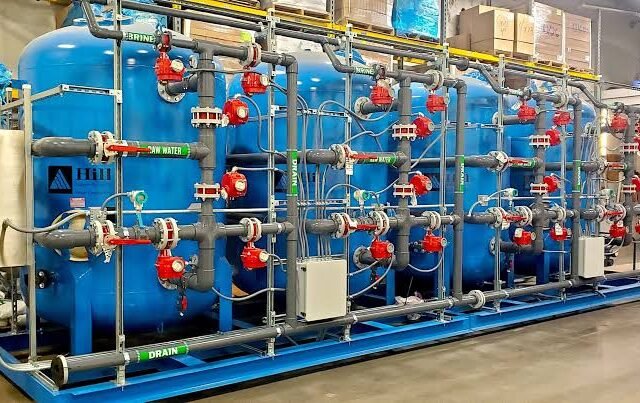
Activated carbon filtration is commonly used to improve taste and odor and can reduce certain substances depending on the specific filter. Water softeners are designed primarily to address hardness minerals. Reverse osmosis systems can provide more extensive filtration for drinking water, while ultraviolet systems may be used for microbiological treatment in appropriate situations.
There’s no universal winner here. The best system is the one suited to the problem you’re actually trying to solve.
Sometimes a relatively simple filter is enough. Other homes may need several treatment stages working together.
Don’t Forget About Maintenance
Even a high-quality treatment system needs attention. Filters eventually become exhausted, membranes need replacement, salt-based systems require replenishment, and equipment may need periodic servicing.
Ignoring maintenance can reduce performance and potentially lead to problems that could have been avoided with a simple replacement schedule.
It helps to keep a note of when filters were installed and when they’re due for replacement. It sounds basic, but this small habit can make a surprisingly big difference.
Consider the Long-Term Cost
The price on the box doesn’t tell the whole story. Before buying, consider installation, replacement cartridges, service visits, electricity or water usage where applicable, and the expected lifespan of the equipment.
A cheaper system may become expensive if its replacement parts are costly or difficult to find. On the other hand, paying more doesn’t automatically guarantee better performance.
Look at value rather than simply price. A system that fits your water conditions, is easy to maintain, and has clear performance information may be the better investment over several years.
Making a More Confident Water Treatment Decision
Choosing water treatment equipment doesn’t have to feel overwhelming. Start with the basics: understand your water source, test when appropriate, identify the specific concern, and then compare technologies designed to address it.
Pay attention to credible certifications, but read what those certifications actually cover. Ask professionals for clear explanations, and don’t overlook maintenance requirements.
At the end of the day, water treatment isn’t about buying the most impressive-looking equipment. It’s about finding a sensible solution that works for your home and your everyday needs.
And once you’ve made that choice, there’s something rather satisfying about the simplest part of the whole process: turning on the tap and not having to think twice about it.